
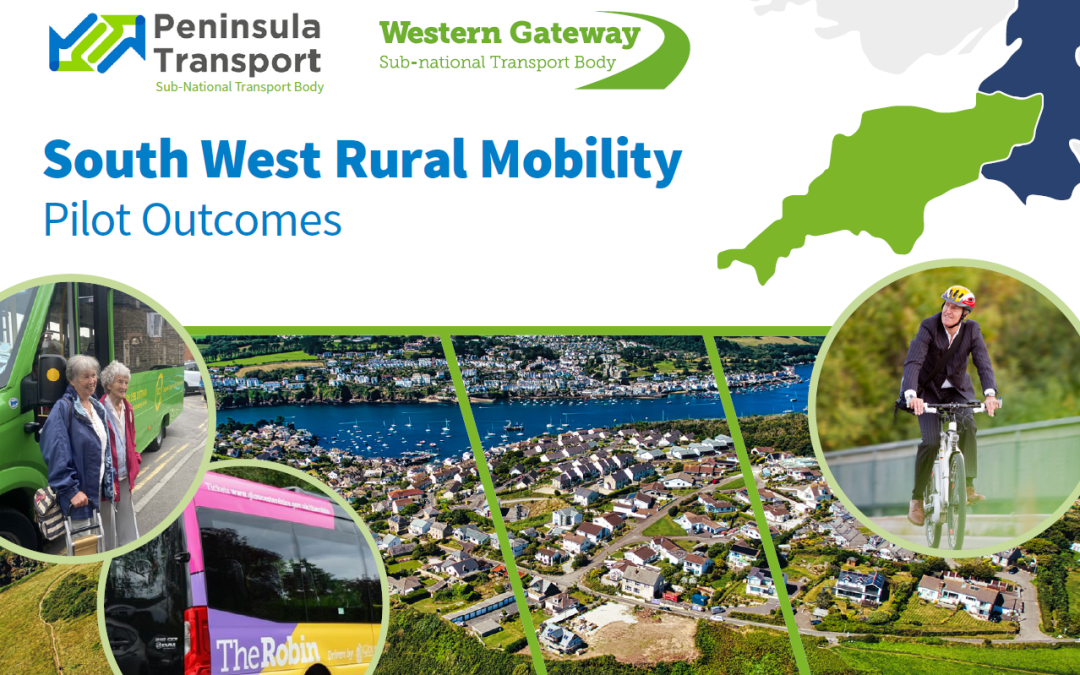
Community-Led Bus Scheme Shows the Power of Local Solutions for Rural Mobility
A new monitoring and evaluation report published by Peninsula Transport and Western Gateway has highlighted the success of innovative rural mobility pilots across the South West, with the Bodmin and Lanivet Community Bus Scheme demonstrating the significant impact that community-led transport can have in rural areas.

Almost two million people in the South West live in rural or remote communities, where limited transport options can make it difficult to access services, employment, social opportunities and healthcare. To help explore new ways of addressing these challenges, Peninsula Transport and Western Gateway funded four rural mobility pilot projects designed to test innovative and locally tailored solutions.
Among the projects, the Bodmin and Lanivet Community Bus Scheme stands out as a strong example of how local organisations can develop sustainable transport services that respond directly to community needs. Delivered by Lanivet Parish Community Centre, the scheme recorded more than 1,600 passenger journeys during the pilot period and now supports 28 community groups. The project has helped connect residents to activities, services and social opportunities, while reducing isolation and strengthening community resilience. The pilot focused on creating a sustainable, community-led transport network that could support older residents, community organisations and rural villages. The evaluation found that the scheme’s success was underpinned by strong local ownership, partnership working and its ability to deliver wider social benefits beyond transport alone.
The report also highlights positive outcomes from three other pilot projects across the South West, including a community shuttle bus linking Bridport and West Bay, the launch of the Forest of Dean’s first EV car club and e-bike hire scheme, and a campaign to increase awareness and use of demand-responsive transport services in Gloucestershire.
Collectively, the four pilots provide valuable evidence that there is no single solution to rural mobility challenges. Instead, successful interventions are those that reflect local circumstances, engage communities and build strong partnerships.
The findings reinforce the importance of community-led approaches in helping rural areas improve connectivity, tackle social isolation, support economic activity and contribute to wider decarbonisation goals. The lessons learned through these pilots will help inform future rural mobility initiatives across the South West, ensuring that transport investment continues to deliver meaningful benefits for the communities that need it most.